Attendees have seen every pen, stress ball, and candy bowl on the floor. To pull an aisle you need motion, reward, and a reason to stay long enough to talk. Here are seven ideas that work, starting with the one that does all three at once.
1. Live t-shirt printing
A running press is visible from down the aisle and the free custom tee is a concrete reason to stop. The line is social proof, and the wait is your reps' opening. It is the rare giveaway that also advertises for you after the show.
2. A limited daily design
Swap the shirt art each day of a multi-day show so day-three attendees have a fresh reason to come back to your booth.
3. Badge-scan reward
Gate the giveaway behind a badge scan so the crowd doubles as clean lead data.
4. A hat bar instead of tees
Richardson 112 caps with pressed patches feel premium and stand out when every other booth is handing out shirts.
5. Make it a drop
Frame a launch tee as limited and print it live so scarcity keeps the aisle full.
6. Staff in the merch
Put your team in the same shirts attendees are earning — it turns the booth into a walking billboard from open to close.
7. Totes for the long game
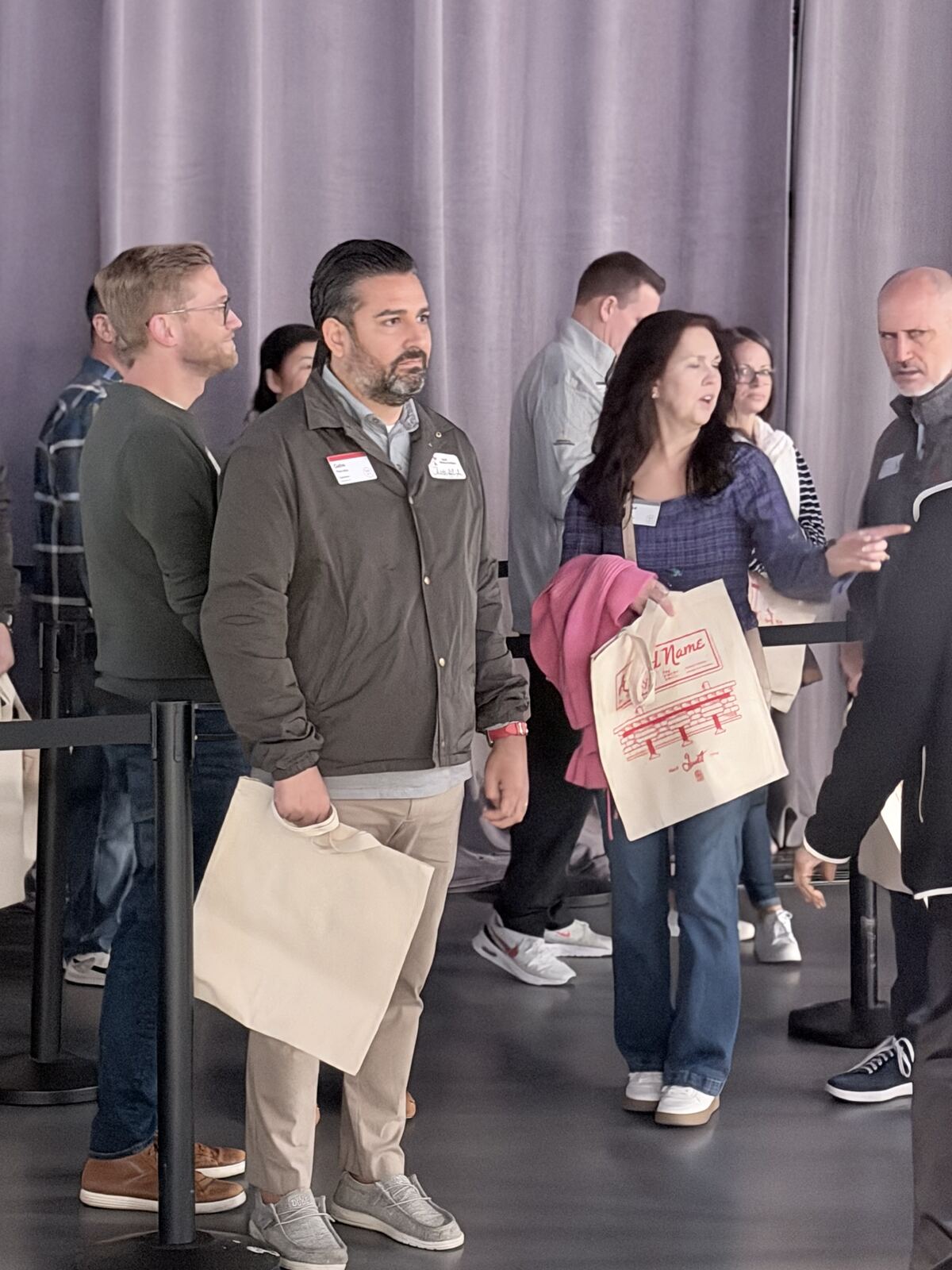
Print canvas totes attendees carry the rest of the show, so your logo travels every aisle, not just yours.
Every one of these works better when the crowd has a place to convert — so pair the draw with reps who know the wait is the pitch window.
RSVP reserve your booth crew
Send your show details once
Give us the show, your booth number and power drop, the tee volume you want to move per day, and where your artwork stands. We come back with a booth-station plan sized to your aisle.
What we need to quote
Show name and dates, booth footprint and power, daily attendance, target shirts per hour, and whether your logo is print-ready or needs art prep.