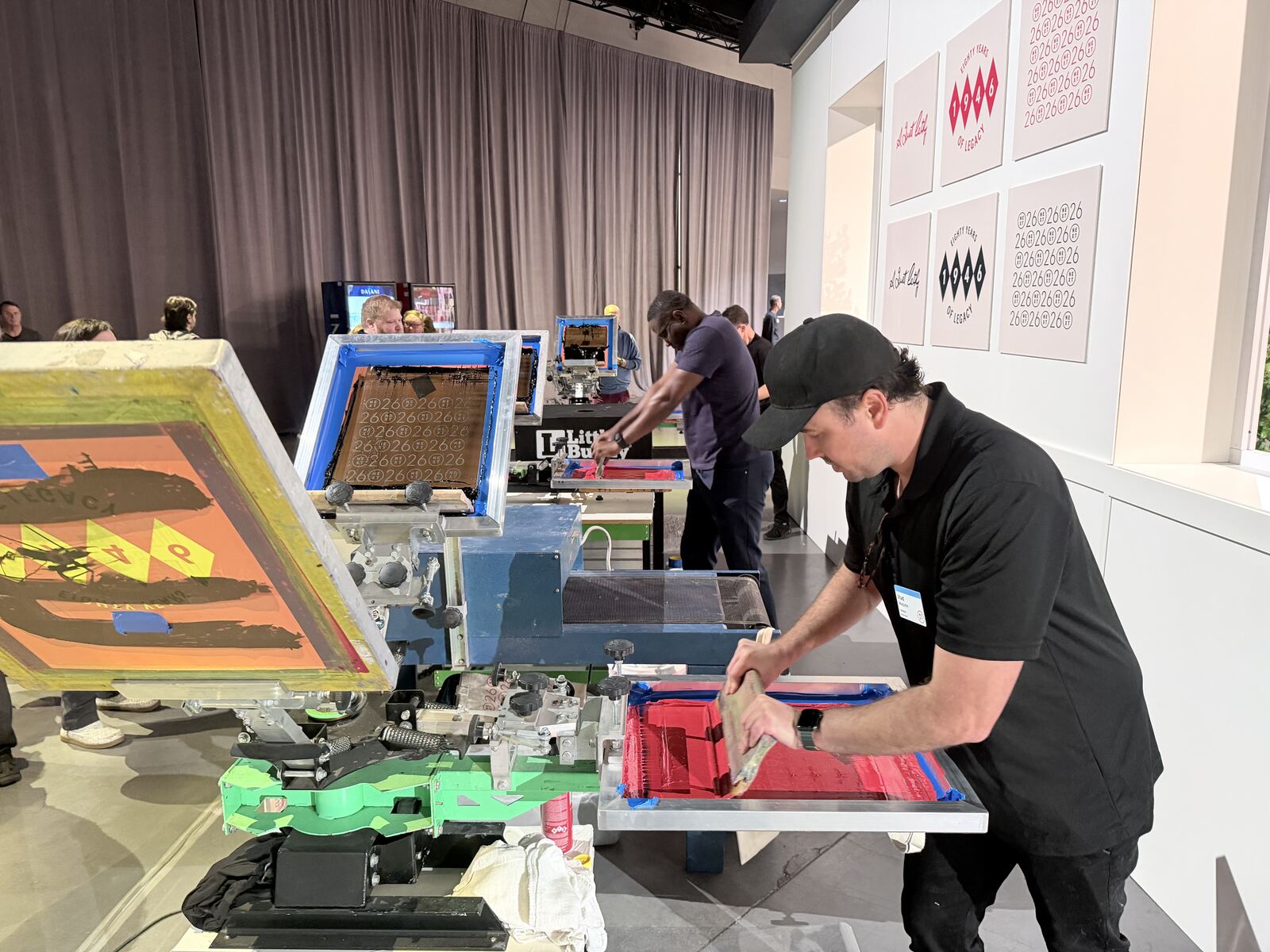
Nobody budgets for drayage. Planners budget for the booth, the shirts, the crew and the flights, and then a bill arrives from the show contractor for a number nobody quoted, attached to a service nobody explained. For a live print station, which involves genuinely heavy equipment plus cases of garments, that bill can rival the printing itself.
This is a plain explanation of trade show drayage and booth freight for print stations — what you are being charged for, how the weight adds up, and where the real savings are.
What drayage actually buys
Your freight carrier delivers to the venue dock and leaves. Drayage — the show calls it material handling — is everything after that: receiving your shipment, moving it from the dock or the advance warehouse to your booth space, taking your empty crates away and storing them for the duration of the show, bringing them back at the end, and moving the repacked freight back to the dock.
It is almost always billed by hundredweight, written as CWT, with a minimum charge of a couple of hundred pounds per shipment. Crucially, it is charged on your gross weight including the pallet and the crate, and it rounds up. It is also effectively a round trip — the quoted rate covers in and out.
You cannot decline it and carry a press in yourself. Union and contractor jurisdiction at most large venues means the material handling work belongs to the show contractor, and the exceptions are narrow and written down in the exhibitor kit.
Advance warehouse versus direct to show
You get two options and the right one is usually the same one.
Advance warehouse. Ship early — typically the window opens about thirty days out and closes roughly a week before the show. The contractor receives it, stores it, and has it sitting in your booth when you arrive. The rate is higher per hundredweight, and it is worth every cent for a print station, because the alternative is a crew standing in an empty booth wondering where the presses are.
Direct to show site. Cheaper per hundredweight, delivered during a narrow assigned window on move-in day. Miss the window and you are waiting in a marshalling yard behind eighty other trucks, or paying a penalty, or both.
For anything with a dependency chain — and a press station is nothing but dependency chain — ship to the advance warehouse. Confirm receipt in writing before you fly anyone anywhere.
Why a print station bills heavy
Heat presses are dense. So are counters, racks and cases of garments. A single-station setup with a press, work table, garment inventory and display fixtures is a real pallet, not a couple of boxes, and the number on the invoice is driven by three things people underestimate.
- Crating weight counts. A protective road case can add substantially to the billed weight of the thing inside it. Protection is not optional for a press, but the case you choose is a cost decision.
- Minimums apply per shipment, not per event. Boxes arriving separately each trigger their own minimum. This is where budgets quietly double.
- Garments are heavier than they look. A case of heavyweight tees is not light, and multiple size runs multiply fast.
The single most effective saving: consolidate. Have blanks, fixtures and equipment meet at one origin, palletize as one consignment, and ship once. Second most effective: ship garments to a local source or hotel where the show rules permit it, so only the equipment goes through drayage. Read the exhibitor kit on this — many shows explicitly prohibit hotel-to-booth transfers, and the penalty is worse than the saving.
Order power before you order anything else
Electrical is a separate exclusive service and a separate deadline, and it is the one that ruins print stations. Each heat press needs a dedicated 20-amp circuit. Two presses sharing a single 20-amp drop will trip mid-queue on a show floor, in front of the aisle you paid to attract.
Order in advance. Show contractors typically discount advance electrical orders significantly against the on-site rate, and the deadline is usually two to four weeks out. Specify the number of circuits and the amperage, not just “power.” Also specify where in the booth the drop should land, because a drop in the wrong corner means either a long cable run across your own floor or a change order at floor rates.
If you are running a badge scan or point-of-sale element, order internet separately and early too. Our notes on badge-scan-to-print booths cover the connectivity side.
Move-out is where money disappears
The end of the show is the part everyone plans least and it is where the surprises are.
Your empty crates come back in an order determined by the contractor, not by you, and on a large floor that can take hours. Budget crew time for it rather than assuming a 30-minute breakout. Label everything with the show-provided empty stickers before it goes into storage; an unlabelled crate is a lost crate.
Have a bill of lading turned in at the service desk and a carrier confirmed with a pickup window. If your carrier does not show inside the window, the contractor force-freights your shipment on their carrier of choice at their rate, and you find out later. For a press station this is a real risk to expensive equipment, so build in a buffer and have someone stay until the freight is physically handed off.
One practical note: do not schedule your crew’s flights based on show close. Schedule them based on empties return plus two hours.
Frequently asked questions
What exactly is drayage and why is it separate from shipping?
Drayage is the show contractor’s material handling service: moving your freight from the dock or advance warehouse to your booth, storing the empty crates during the show, and returning everything at the end. Your carrier’s job stops at the dock. Drayage is what happens after that, it is billed by the show, and it is usually charged per hundred pounds with a minimum.
Can we just hand-carry the presses in ourselves?
Sometimes, within limits. Most shows allow an exhibitor to hand-carry small items through a designated entrance without a cart or dolly, and a few allow a privately owned vehicle unload. Heat presses are heavy enough that this rarely covers the whole station, but it can cover garments and supplies. Read the show’s specific rule rather than assuming last year’s applies.
What is the single biggest drayage saving available?
Consolidating shipments. Every separate delivery to your booth triggers its own minimum charge, so three boxes arriving from three suppliers on three days can cost several times what one pallet costs. Route everything to one origin, palletize it, and send it as a single consignment.
Let us handle the freight side
We ship, crate, receive and move out print stations for shows regularly, and we will read your exhibitor kit with you so the drayage and electrical numbers are in the budget from the start rather than in the reconciliation. Send your show name, booth number and dates through the quote form or call (562) 614-4800. For the part that happens once the booth is built, see our booth traffic ideas.
RSVP reserve your booth crew
Send your show details once
Give us the show, your booth number and power drop, the tee volume you want to move per day, and where your artwork stands. We come back with a booth-station plan sized to your aisle.
What we need to quote
Show name and dates, booth footprint and power, daily attendance, target shirts per hour, and whether your logo is print-ready or needs art prep.